
Notes on Conditional Purchases
This data has been compiled from the Votes and Proceedings of the Legislative Assembly of New South Wales and records more than 9,000 applications for the conditional purchase of Crown Land between 1 January 1862 and 30 September 1864.
Historical Background
The Crown Lands Alienation Act of 1861—commonly called the Robertson Land Act—was one of the most significant reforms in colonial New South Wales. It was designed to “unlock the land” by breaking the dominance of the squatters and allowing ordinary people, known as selectors, to obtain small parcels of Crown land.
Under the Act, any adult could apply to conditionally purchase up to 320 acres of Crown land at a set price of £1 per acre. The purchaser was required to pay a deposit, make improvements (such as fencing or cultivation), and reside on the land for a set period before the purchase was finalised. Only when the balance was paid and conditions satisfied did the land become freehold.
 Multiple Owners
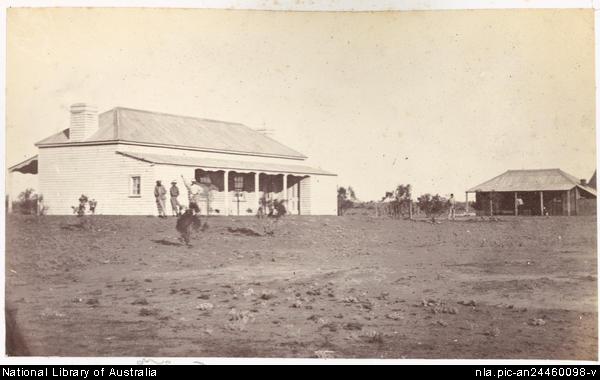
A Conditional Purchase (CP) was not always completed by the original applicant. A block might be sold, forfeited, or transferred during the years before final payment. As a result, the name recorded on a parish map is that of the person who finally secured the title—not necessarily the first to apply. This distinction is crucial for family historians, as the individual listed as the final purchaser may not be the ancestor you are researching.
Using the Records
If you do not know the parish or district where your ancestor applied, you must search the Conditional Purchase records at Kingswood (NSW State Archives). These are arranged not alphabetically, but by the sequential number of the Conditional Purchase.
To assist researchers, I have entered the data into a database and reorganised it alphabetically by surname. This allows you to locate names more efficiently and then identify the relevant Conditional Purchase (CP) number.
Interpreting Dates
One important detail: the year listed as the balance payment due is not the same as the year of application. To estimate the application year, subtract three years from the balance year. For example, if the balance was due in 1865, the application was lodged in 1862.
| Conditional Purchase | ||||||||
| Cond Purchase No | Surname | First Name | Area a r p | District | Class | Amount Recd £ s d | Balance due £ s d | Date Balance Due |
| 2093 | Abberton | James | 48.0.0 | Goulburn | 1st Class | 12.0.0 | 36.0.0 |
8/04/1865 |
| So the CP number for James Abberton would be the year the balance payment is due minus three i.e. CP62‐2093. |
Using this number you can then check the register for conditional purchases before 1912, and note all the relevant information.
Background to Conditional Purchases.
In 1861 the management of Crown Land was changed with the introduction of Sir John Robertson ‘free selection before survey’ Acts. There were two Acts, the Crown Land Alienation Act 1861 for the sale of land and the Crown Lands Occupation Act 1861 for the leasing of Crown Land. The first mainly concerned the ‘free’ selection of land whilst the second chiefly concerned the squatters. Robertson’s Acts gave selectors the right to obtain a Crown Grant for a ‘living area’ of land without survey (conditional purchase) in any Crown Land, leased or unleased. These new laws made all leasehold land in the colony available for sale or lease. (The alienation of land in the colonies of NSW and Victoria was a convoluted process with changes to the land laws adding to the compexity. If you like to read more follow this link to my historical notes.)
 The Crown Lands Occupation Act replaced the previous classification of land and divided the country into First Class Settled District (formerly Settled Districts) Second Class Settled Districts (formerly Intermediate Districts) and Unsettled Districts- unchanged. Crown Land was classified as town land, suburban land, first class and second class settled and unsettled. Crown Land was not available for conditional purchase if it was town or suburban land, within a proclaimed gold field, under lease for mining purposes or reserved for the site of a town, village or for a water supply.
A ‘living’ area was from 40 to 320 acres with an obligation to live on the property for at least three years. The purchase price of £1 per acre ( PDV $83.46 ) was payable by a deposit of 25 percent and the balance with interest at 5 per cent. Payments could be made annually. However the balance with interest could be paid over an extended period and it was not unusual for 20 or 30 years before freehold title was obtained.
The selector also had a requirement to effect improvements at £1 per acre, reside on the land and occupy the land for three years. Title was then given provided that the conditions regarding improvements and residency were being fulfilled. These small farmers were known as ‘selectors’ and the land as ‘CP’ or ‘Conditional Purchase’ blocks.
In 1863 the Legislative Assembly of New South Wales directed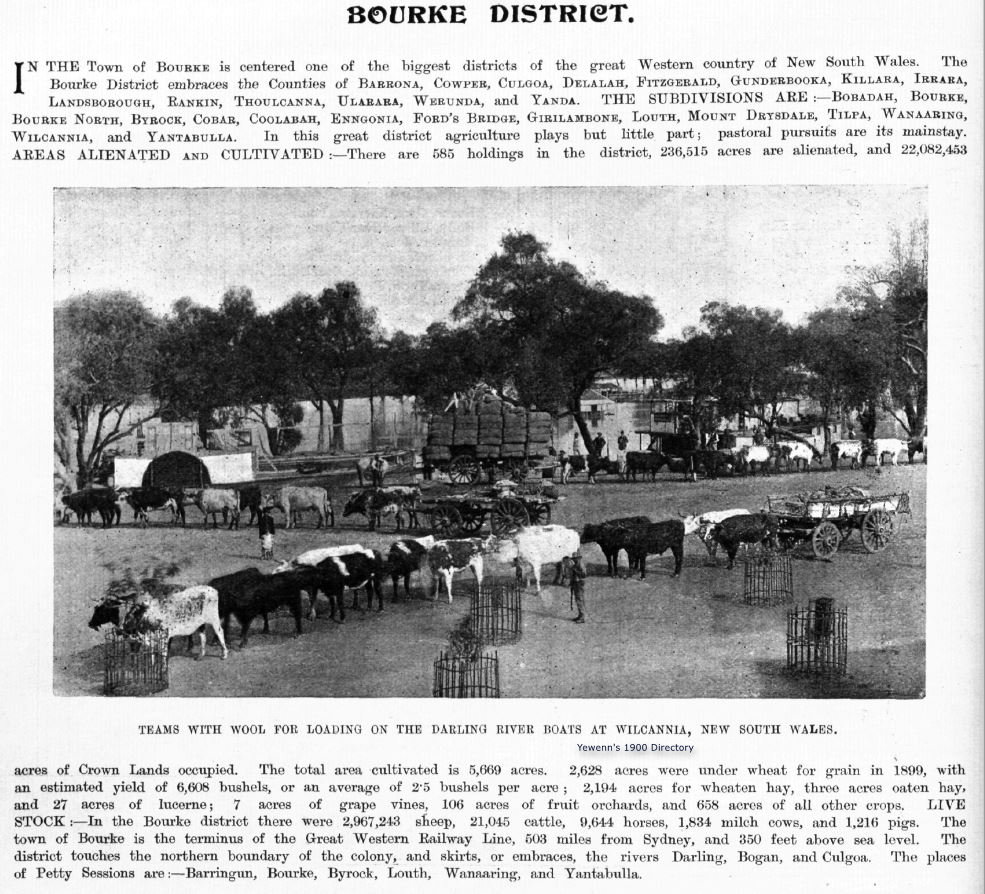
‘that there be laid upon the table of this House :- A Tabular Return shewing the names of all persons who have purchased Land conditionally under the Land Alienation Act of 1861, to the 31st October 1863: the quantity of Land in each purchase; the 1st or 2nd class Settled Districts, or the Unsettled Districts, wherein the Land is situated; the amount of money received on each lot; the balance remaining to be received; the date when the balance of the purchase money shall be payable…’
The procedure was that each major rural centre had a Land office. The land agent would record the name of the conditional purchaser , the residence and nearest post town and the date and time of selection and record a detailed description of the property boundaries. The application would be forwarded to Sydney where it would be given a number: the first two digits would be the year received and the last four the applicant number for that year.
Land Districts as at 1861 (73 off)
Adelong, Albury, Armidale, Berrima, Bathurst, Binalong, Bombala, Braidwood, Brisbane Water, Broulee, Bungendore Creek, Burrowa, Campbelltown, Casino, Cassilis, Camden, Carcoar, Clarence Town, Cooma, Deniliquin, Dubbo, Dungog, Eden, Forbes, Gosford, Grafton, Gundagai, Goulburn, Hartley, Jugiong, Kiama, Macdonald River, Macleay River, Maitland, Moama, Molong, Moruya, Mudgee, Manning River, Murrurundi, Muswellbrook, Newcastle, Orange, Parramatta, Paterson, Patrick’s Plains, Penrith, Port Macquarie, Port Stephens, Queanbeyan, Raymond Terrace, Rylstone, Sydney, Scone, Shoalhaven, Singleton, Sofala, St. Albans, Tambaroora, Tamworth, Tenterfield, Tumut, Wagga Wagga, Warialda, Walcha (and Bendemeer), Wee Waa, West Kempsey, Windsor, Wingham, Wellington, Wollombi, Wollongong, Yass,
Unfortunately for researchers from 1862 to 1864 the records are indexed according to the locality and not by name and in numerical order of the CP number.
So if you find that your ancestor was farmer but you can’t find any record of him on the parish map, the Torrens Title Index, Old System Index, Vendors Index or Old Title Purchaser Index. If this is the case it means that he was a conditional purchaser who had not yet meet all the conditions for purchase.
I have digitized these returns. There are over 9,000 entries. The listing is of importance to researchers as it provides the conditional purchase number and district.
For Conditional Purchasers A to G see here.
For Conditional Purchasers H to Z see here
Bibliography
Background to Conditional purchase of Crown Land. State records of NSW Archives in Brief 93
Using Conditional purchase records. State Records NSW Archives in Brief 94 ( a must see)
Baker, D.W.A. The Origins of Robertson’s Land Acts. Historical Studies Australia & New Zealand. Vol 8, Nov 1957 – May 1959 . p.166 ff
Walker, R. B. Squatter and Selector in New England, 1862 – 95. Historical Studies Australia & New Zealand. Vol 8, Nov 1957 – May 1959 . p.66 ff
Simpson, Archibald. Handbook of the Crown Lands Alienation Acts of NSW. 1882
Ferry, John. New South Wales Land Records and Family History. In First International Congress of Family History. 1988. Sydney.
King C.J. An Outline of Closer Settlement in NSW. Part 1. The Sequence of Land Laws. 1788 – 1956. Dept. Of Agriculture. 1957 Sydney
[whihitit]condpurchnotes[/whohit]