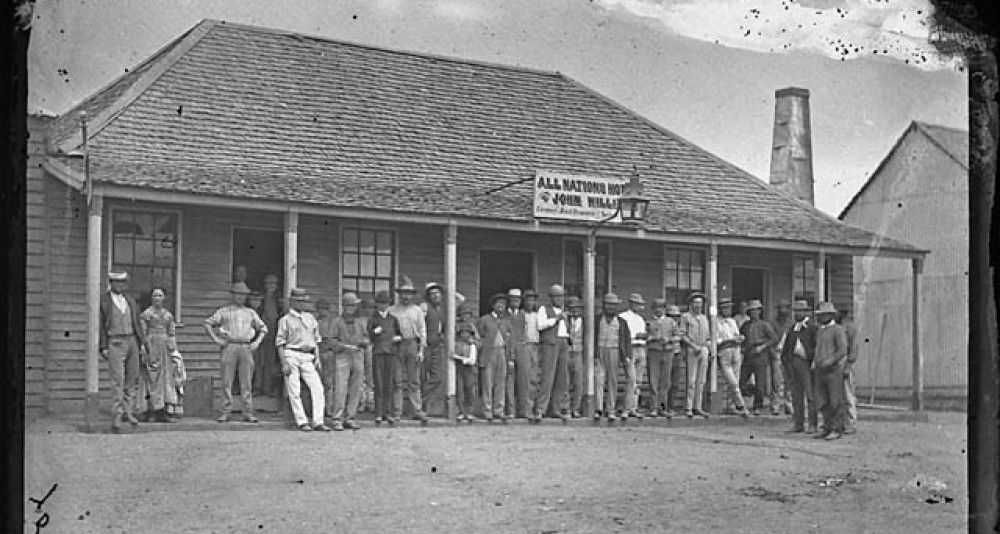
-
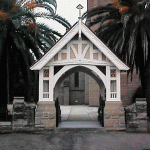
- Lych-Gate All Saints Church Singleton
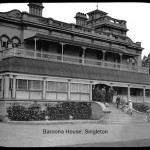
-
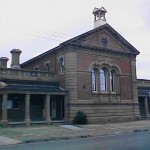
- Court house
-
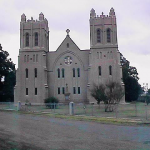
- St. Patrick’s Catholic Church, Queen St. Singleton
-
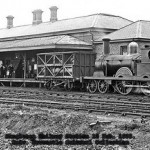
- Singleton Rail Station
-
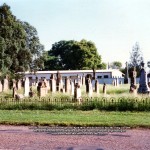
- Queen St Cemetery
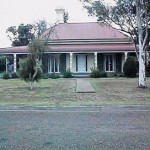
-
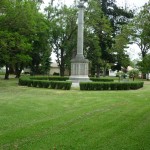
- Singleton Cenotaph, Burdekin Park
-
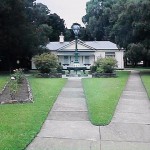
- Musuem & Munro Fountain
-
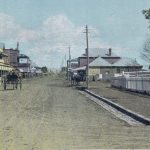
- John St. c. 1902
Introduction.
The town was gazetted as a post town in 1841 despite press reports that in Singleton ‘bad liquor, high charges and drunkenness still prevail. Social harmony is more that ever out of tune, over reaching and undermining, bro-beating and back-biting being the order, or rather disorder of the day.’ (Sydney Herald June 30, 1841). In 1848 Singleton was described in Wells Dictionary and Gazetteer as ‘ A town in NSW , situated at Patricks Plains, in the parish of Whittingham, in the count of Northumberland, on the south bank of the Hunter River, 120 miles from Sydney. It contains 127 houses and 565 inhabitants’.
-
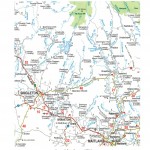
- Singleton
-
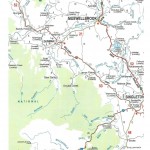
- Singleton – Denman – Muswellbrook
-
- Singleton – Muswellbrook
Some years later W. Morrison was to describe ‘the town (as) well built and prosperous …All kinds of crops grow here to perfection. The price paid for good sections of farming lands is enormous, sometimes reaching as high as sixty pound an acre’ . By 1881 the Newcastle Directory and Almanac for that year wrote that “Singleton is the head assize town of the pastoral and agricultural district of Patrick’s Plains, and can boast some of the largest and handsomest buildings in the Northern district.‘
Singleton 1866
 There are now not less than twenty-two public houses licensed in the town of Singleton and its immediate vicinity producing with license fees for billiards and bagatelle tables, annual revenue of more than £700 to the Government for the sale of intoxicating liquors.
Source: Maitland Mercury 10 May 1866
The extension of the railway past Singleton in 1870 was reported :-
Singleton 1870
Singleton, though undoubtedly a romantic little town, surrounded by verdant meadows, majestic mountains, and other elements of the picturesque, is not by any means the liveliest place in the world A few months ago it was a hustling entrepot of commerce, noisy with the cracklings of whips, the rumbling of dray -wheels, mid the other welcome sounds of traffic but since the railway has been extended to Muswellbrook, and the Business which gathers about a railway terminus has been transferred thither, Singleton has fallen into a somewhat melancholy plight.
Its glory is departed, its streets almost as silent as the enchanted thoroughfares of that deserted city, whose mysterious splendors are preserved in Arabian tradition, its tradesmen are ever on the watch for customers who never come, , and its inhabitants generally seem to be infected with a kind of commercial torpor, and to have in “retired from business”’.
The idea of anybody attempting to ” drive a roaring trade ‘ in Singleton at present is simply absurd, indeed the noisiest and most obtrusive trade that was over invented, even in Yankee-land itself, would be utterly unable to ” roar ” in such a languid atmosphere-would be abashed and silenced in a twinkling.
So seem to think many of the late residents, who have shifted their quarters, and whose deserted Warehouses etc. , with their closed shutters, and placards setting forth that the premises are ‘ to let,” render the dull streets more melancholy still.. Clearly the pace has been too hot for Singleton , it went ahead too fast from the start, and now has it pulled up with a rather unpleasant jerk ‘.
The Spirit of the Age-which is, of course a money -making Spirit, and intimately acquainted with pounds, shillings, and pence-has flapped her fickle wings in the faces of her old protege’s, and followed the course of the railway like a false, time serving jade as she is.
Sydney Morning Herald 12 August 1870
Singleton 1870
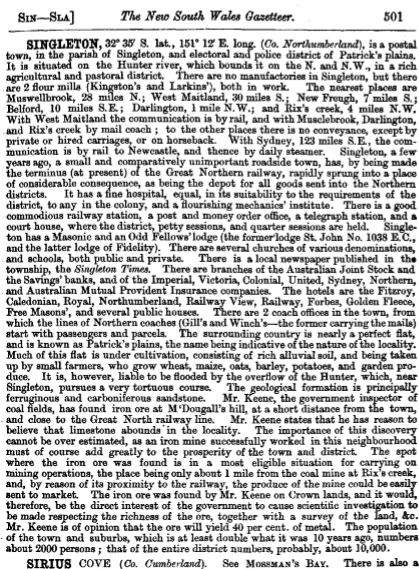
Bailliere”s NSW Gazetteer 1870
Singleton 1888
SINGLETON, before mentioned, is a town of about 2,000 inhabitants,situated on the Great Northern Railway line, and also on the bank of the River Hunter, in the midst of a rich valley or district called Patrick’s Plains. The town is well built, and is prosperous, being the trading centrefor a very large section of good farming country. All kinds of crops grow here to perfection. The price paid for good sections of farming lands is enormous, sometimes reaching as high as £60 an acre-special lots selling at £100. This speaks for itself. No land of an ordinary character would justify such prices for agricultural purposes, unless it was of a first-class quality. Singleton is remarkable for its excellent yearly shows. If a man wishes to get an idea of the agricultural capabilities of Australian soil, let him visit one of these gatherings at the Singleton show ground, and if he has a taste that way he will not fail to be surprised and gratified at the good quality of the grains, fruit, roots, and stock of the district, and will be equally pleased with the sturdy manhood and womanhood of the multitude of young people that take an active interest in every department of their enterprises.
Source: Aldine Centennial History of NSW 1888
For more data bases and historical notes on Singleton follow the following links:- PS I have commenced making some of these resources available as downloads. For more information see here.
If you need any help contact me at txcallaghan@gmail.com
Singleton & District Residents extracted from PO Directories – examples
Singleton Residents extracted from the 1926 ‘Back to Singleton’ Souvenir publication.
Singleton & District Innkeepers.
Singleton & District Place Names.
Singleton- Queen St. Cemetery – Notes
Singleton Presbyterian Baptismal Register – extracts.
Singleton and Local Government.
St. Patrick’s Catholic Church Queen St. Singleton – some notes
St. Patrick’s Church Queen St. Singleton – some more notes.
Singleton District – some notes about Rix’s Creek.
Some notes re Roman Catholic Parish of Singleton in 1925.
Singleton – Resources – Pupils of Mitchell’s Flat School – extract from roll
Singleton – Mitchell’s Flat School and Education
Singleton – Burial Records Anglican Parish – Whittingham
Singleton – Cenotaph Inscriptions
Singleton – Rate payers & Landlords 1867
Singleton & District Residents 1913
Singleton and Jerry’s Plains
Singleton – School Teachers ( not all)
Singleton & District Maps.- Singleton Streets 1913 Electoral Boundaries Wollombi Goorangoola Warkworth
I maintain extensive data bases and resources for the Singleton and Patrick’s plains area of New South Wales.
Note! Also refer to my historical notes for background information regarding Singleton
References
Back to Singleton. September 15 to 26, 1926.
Bush Schools. Past and Present of Patrick’s Plains
Centenary of the Municipality of Singleton. 1866 – 1966. nd.
Clayworth, D. All Saints’ Anglican Church-Singleton. 1978.
Echoes and Images. nd.
Fink, E. The Built Environment of the Shire of Singleton. 1977
Foggo, C. Inns and Hotels . 1825 – 1900. 1989.
Heritage Study, George Street, Singleton. nd
King, H. The Urban Pattern of the Hunter Valley. 1963. Extracts re Singleton.
Muswellbrook Pioneer Register
Mitchells Flat School 1882 – 1956. Roll of Pupils.
McGee John. Two and A Half Convicts. 1987
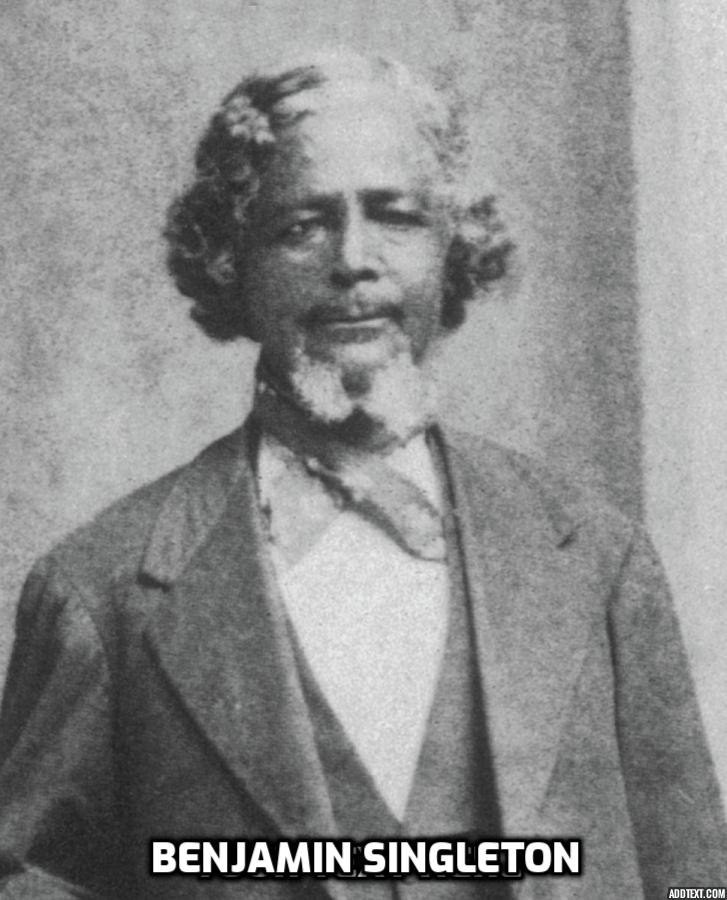
Mahaffey, K. “…And Another Reapeth”. Benjamin Singleton. Pioneer of the Hawkesbury and Hunter’s River, Liverpool Plains and the Macintyre. nd. Extracts.
Noble, Lillian. The Glennies Creek Story. nd.
Residents of Singleton & District based on Military Records and Memorials
Robinson, R. H. 150 Years. A History of the Anglican Community in the Singleton District. 1839 to 1989. nd.
Singleton & District Pioneer Register
Singleton “Howe” it started and grew. 1995.
Singleton. Municipality and Shire. 125 Years On. 1866 – 1991.
Sinclair, M. Sacred Places. Sisters of Mercy Singleton. 1995.
Singleton & Jerry’s Plains Conservation Area Study. 1994.
Sternbeck, Michael. The Catholic Church in Singleton. An Historical Look at its People and Progress. 1985 and Supplement The Catholic Church in Singleton. 1995
Sternbeck, Michael. Saint Patrick’s Church. Jubilee Souvenir. 1860 – 2000.
Torr, Harry. The Singletons. Arrivals by Necessity, not Choice. nd.
Whitelaw E. A History Of Singleton. nd.
[whohitit]stonhomepage[/whohit]